Mnemosyne: What It Kills / Replaces
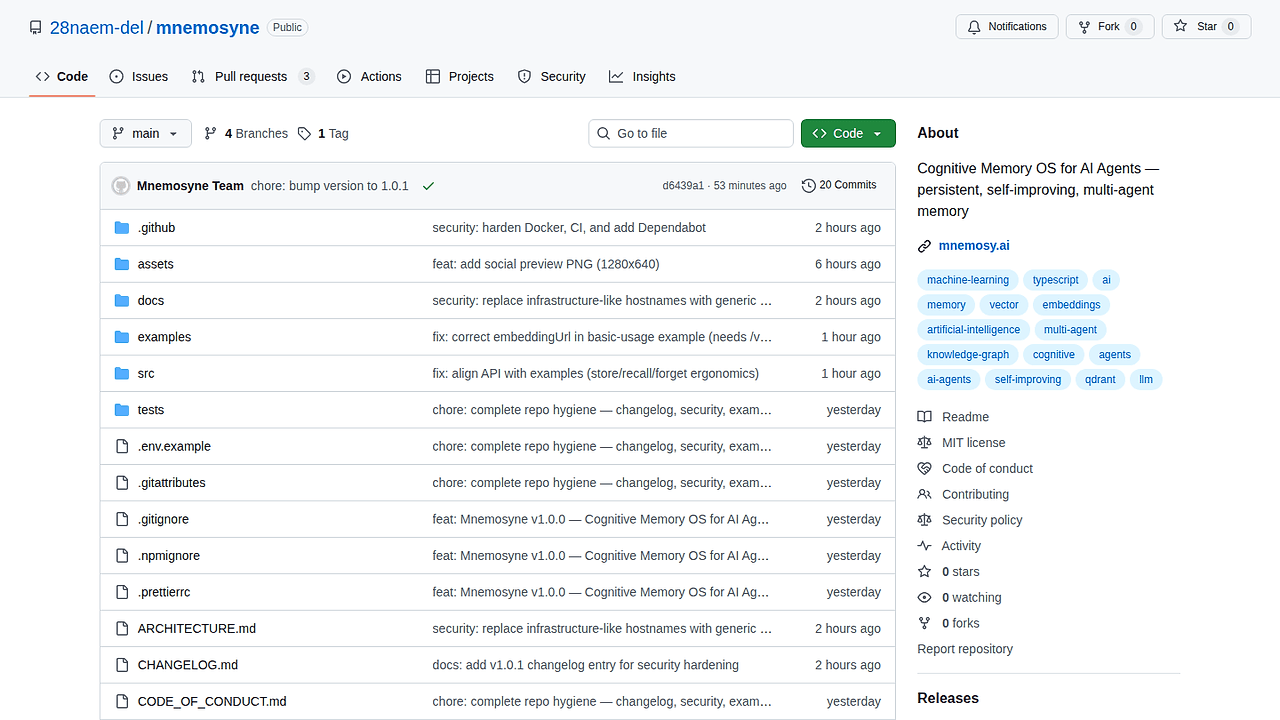
Mnemosyne takes on traditional stateless AI frameworks that fail to incorporate memory, which means they always start with a blank slate and are unable to learn from past interactions.
Under the Hood: Architecture / Core Mechanic
This tool utilizes a 5-layer cognitive architecture that mirrors human memory storage and retrieval. By relying on a sophisticated model of decay and reinforcement learning, Mnemosyne creates a self-improving memory system capable of operating autonomously, contrary to stateless agents that simply recall from previous states.
The Good & The Bad
Pros:
- Memory persistence: Unlike competitors, it doesn’t lose context between interactions.
- No LLM costs: The ingestion process is priced at $0 per memory stored—significant savings over models charging per LLM call.
- Built-in knowledge graph: Comes with auto-linking and pathfinding features out of the box.
Cons:
- Complex setup: It may require a steep learning curve for developers unfamiliar with cognitive models.
- Performance tuning needed: Real-world usage may demand extensive fine-tuning of cognitive processes for optimal performance.