DataHaven: What It Kills / Replaces
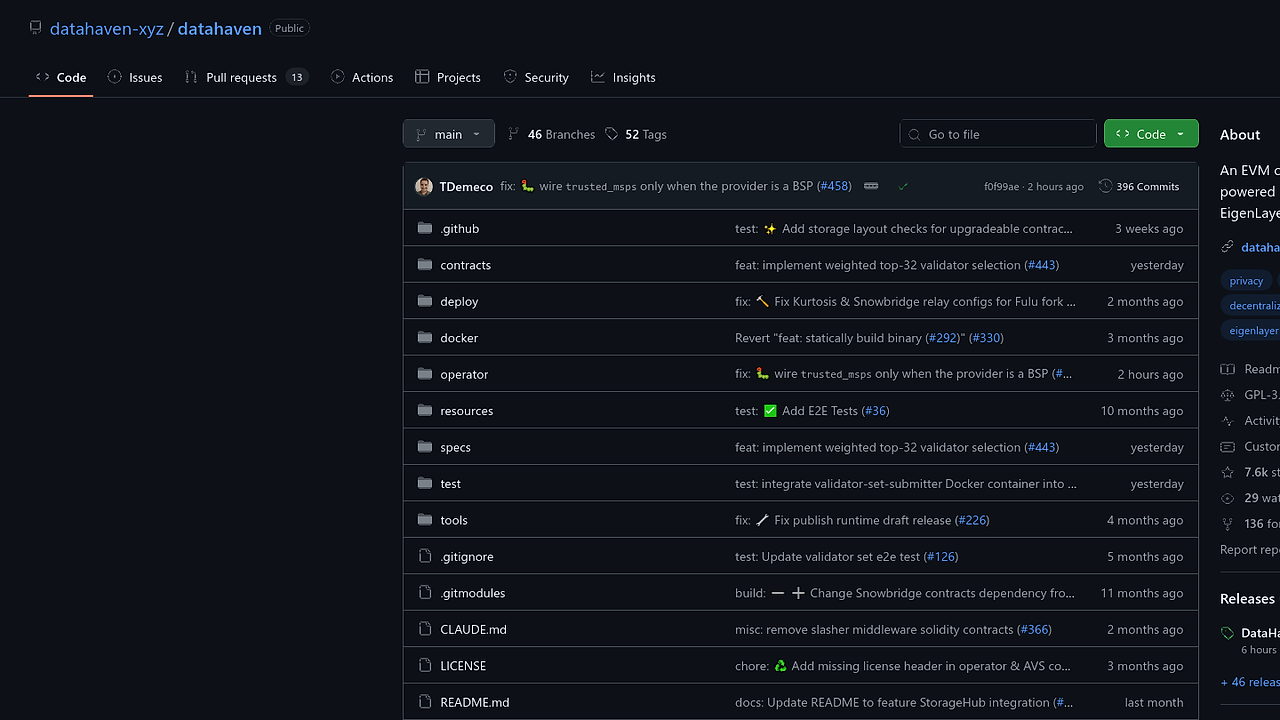
DataHaven targets the legacy pain points of centralized storage solutions that are prone to data tampering and reliability issues, particularly in the realm of AI training and Web3 applications. It effectively replaces traditional cloud storage providers by ensuring data integrity through cryptographic proofs.
Under the Hood: Architecture
DataHaven is built on EigenLayer's restaking protocol, allowing its validators to register as operators who enforce slashing for misbehavior. Core components include Merkle trees for data verification, separating storage from verification processes. By chunking files and committing them on-chain, any changes or tampering can be proven, delivering trustworthiness in data management.
The Good & The Bad
Pros:
- Verifiable storage through on-chain commitments ensures integrity.
- Designed for high scalability with a decentralized provider network.
- EVM compatibility enables ease of integration with existing Ethereum tools.
- Supports trustless cross-chain bridging with Snowbridge for efficient message passing.
Cons:
- Complexity of architecture may lead to a steeper learning curve for newcomers.
- Reliance on Ethereum could pose challenges during network congestion.
- Current developer support may be limited due to emerging status.
Quickstart
# Deploy your own DataHaven instance
# Make sure to have EigenLayer and Snowbridge configured
This command sets you up with an instance of DataHaven, leveraging EigenLayer’s validation process for secure operations. Expect to manage your storage entries via the built-in tools and protocols provided by the framework.
Who Should Use This (and Who Shouldn't)
Use it if:
- You’re building decentralized applications that require trustless, verifiable storage solutions.
- You need a robust mechanism for managing AI training data while ensuring sensitive information isn't tampered with.
- Your project heavily relies on Ethereum-based tools and frameworks.
Skip it if:
- You require immediate, low-latency access to storage that traditional solutions provide.
- Your team lacks familiarity with blockchain principles and smart contract deployment.
- A central authority for support and rapid iterations is a non-negotiable requirement.
Alternatives & When to Switch
If you need traditional file storage with less overhead, use AWS S3 instead. For projects that prioritize rapid development and don't require extreme data verification, consider Firebase, which offers a more straightforward API and instant results. If you aim for blockchain features but want a more mature solution, opt for Filecoin as a well-established decentralized storage alternative.