MiniVim: What It Kills / Replaces
MiniVim replaces bulky Neovim configurations like LazyVim and AstroNvim. It's designed for developers who want a clean slate rather than a fully-featured distribution that hides complexity.
Under the Hood: Architecture
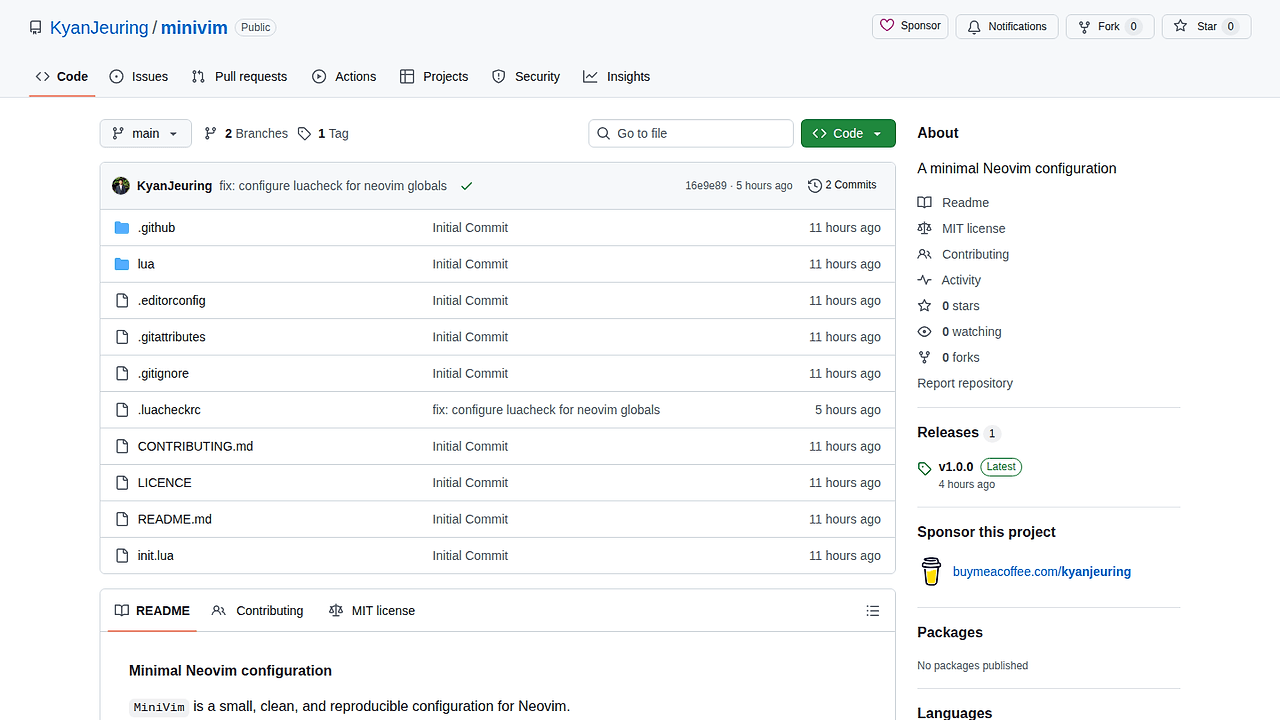
MiniVim is built using Lua for its configuration, emphasizing minimalism with a straightforward directory structure. The user controls their setup without hidden abstractions, allowing for quick adjustments and a lean startup time.
The Good & The Bad
Pros:
- Pure Lua configuration allows for straightforward customization.
- Fast startup times improve user experience over heavier frameworks.
- Clean directory structure makes the configuration easy to navigate.
- Minimal plugin set keeps the setup lightweight and efficient.
Cons:
- Not suitable for users wanting a complete feature set out of the box.
- Lacks the extensive plugin ecosystems found in alternatives like LazyVim.
- Developers must manage their extensions and keymaps manually, which could hinder productivity for some.
Quickstart
To get started with MiniVim:
mv ~/.config/nvim ~/.config/nvim.backup
git clone https://github.com/kyanjeuring/minivim.git ~/.config/nvim
nvim